Pre-tax value goes unused
HSA, FSA, dependent care, and commuter elections sit below what many households could use. Every missed qualifying dollar leaves both employee tax savings and employer payroll tax savings behind.

Matchbook is the coordination layer between plan documents and enrollment. Employees get household-specific recommendations with paycheck impact, and the employer gets higher adoption of qualifying pre-tax benefits, lower employer FICA where applicable, fewer HR tickets, and an operating report after payroll runs.
A two-sided win: employees keep more of their paycheck, and employers cut payroll tax on the same dollars.
7.65%
Employer FICA rate on qualifying pre-tax elections, before Social Security wage base effects.
$183
Employer payroll tax savings on each extra $2,400 of qualifying pre-tax elections.
1,200
Demo employer size modeled from the ACME 2026 benefits fixture.
30 days
Target pilot window from plan ingest to a post-payroll operating report.
Open enrollment becomes a speedrun. The result is predictable: underused qualifying pre-tax elections, missed plan features, and a benefits budget that looks like a spend line with no measurable return.
HSA, FSA, dependent care, and commuter elections sit below what many households could use. Every missed qualifying dollar leaves both employee tax savings and employer payroll tax savings behind.
Employees ask HR which plan to pick, whether an HSA makes sense, and how to coordinate spouse coverage and childcare. HR cannot personalize household math at scale.
Leadership sees premium spend and renewal increases. They rarely see which dollars were unlocked, which segments improved, and where employees got stuck.
Matchbook turns plan rules plus employee inputs into auditable elections. Employees get the personal recommendation; the employer gets aggregate outcomes without becoming an adviser.
Finance gets a model and a post-payroll report: incremental qualifying pre-tax elections, employer payroll tax impact, and payback period.
Employees get household-specific guidance while HR keeps control over plan rules, disclaimers, and escalation boundaries.
Matchbook turns plan design into employee-level decisions, then feeds adoption gaps back into renewal planning.
Employers set the guardrails. Employees answer what changes the math. Payroll proves the result.
SPDs, rate sheets, contribution rules, IRS limits, and payroll-eligible benefits become a structured benefits graph.
HR approves disclaimers, escalation rules, plan constraints, and which aggregate metrics are visible to the employer.
The employee answers only the questions needed for their household. Matchbook calculates plan fit, contribution levels, and paycheck impact.
Dashboards show unlocked pre-tax dollars, payroll tax impact, improved elections, underused benefits, and recurring support questions.
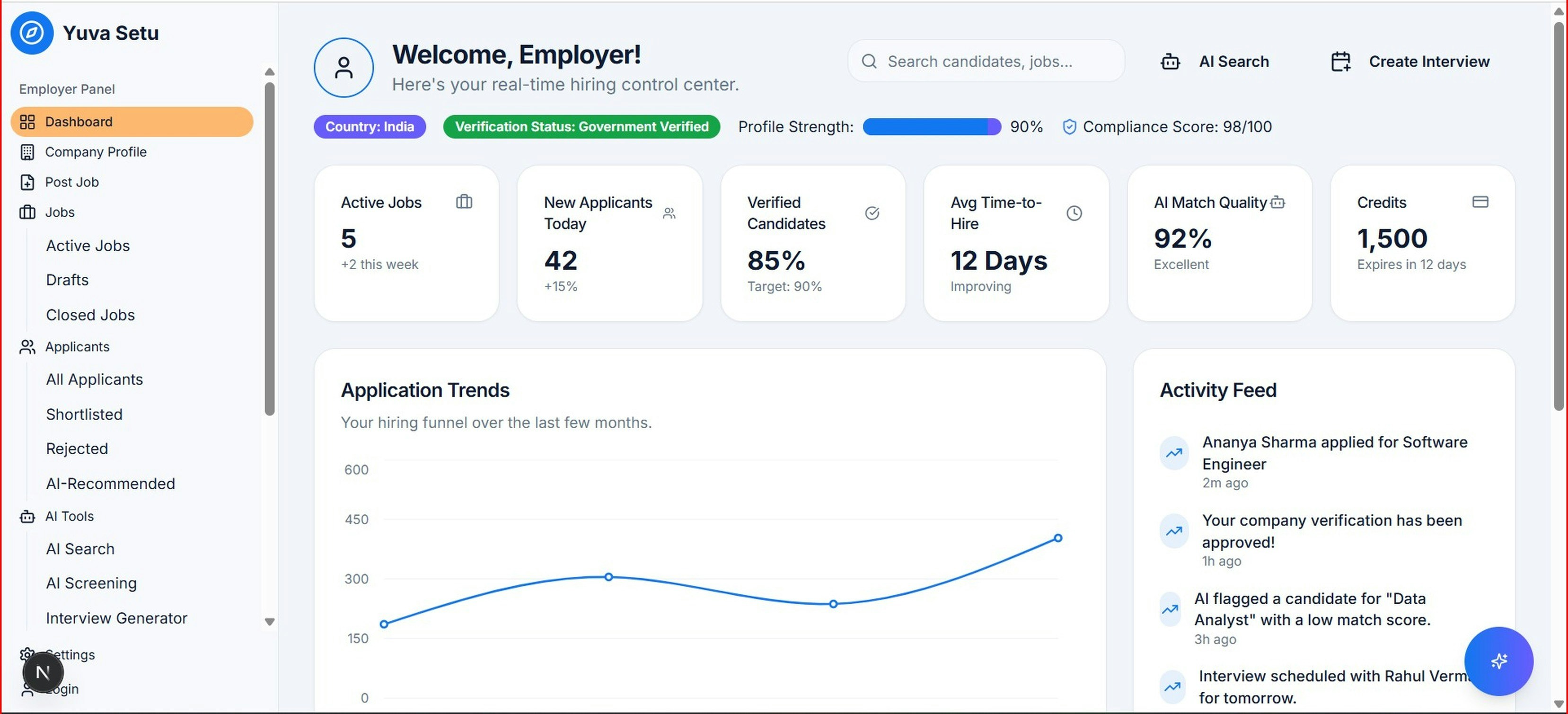
Employer dashboards translate employee decisions into aggregate plan quality, adoption gaps, and measurable savings.
HR and finance get a benefits performance view that ties employee decisions to measurable employer outcomes.
Example using the ACME 2026 fixture: 1,200 employees. If Matchbook drives $2,400 in additional qualifying pre-tax elections per participating employee per year, the employer saves up to $183.60 in FICA on those dollars (before wage base effects).
| Line | Model | Employer impact |
|---|---|---|
| Incremental qualifying pre-tax election | $2,400 per participating employee per year | Section 125 elections such as HSA, healthcare FSA, dependent care FSA, and commuter benefits. |
| Employer FICA rate | 7.65% (6.2% Social Security + 1.45% Medicare) | Up to $183.60 saved per participating employee, before wage base effects. |
| Modeled population | 1,200 employees (at 100% participation) | $220,320 gross employer payroll tax savings pool under the assumptions above. |
| Matchbook report | Aggregate, de-identified analytics | Finance can compare platform cost against realized payroll and support savings. |
Employee savings are the adoption engine. Employer payroll savings are the measurable offset. Matchbook connects the two and turns open enrollment into a defensible business case.
Modeled gross employer FICA savings pool for a 1,200-person employer under the assumptions above.
Actual savings depend on participation, employee wages, benefit eligibility, payroll configuration, and applicable tax rules.
Your broker designs the plan. Your admin platform collects elections. Matchbook does the household math in between and returns an auditable recommendation.
| Capability | Benefits admin platform | Broker webinar | Matchbook |
|---|---|---|---|
| Personalized household math | Limited | Generic examples | Employee-specific recommendation |
| Plan document reasoning | Stores documents | Explains highlights | Turns plan rules into a benefits graph |
| Employer payroll savings model | Rare | No | Included |
| HR support deflection | FAQ articles | One-time session | Guided flow plus escalation rules |
| Renewal intelligence | Enrollment counts | Anecdotal feedback | Underuse, confusion, and value unlocked |
Employees need privacy. Employers need results. Matchbook separates personal recommendation details from aggregate operational reporting.
Employers see trends, unlocked value, participation, and plan friction. Individual household details stay with the employee unless they choose to share in an escalation.
Plan administrators approve disclaimers, source documents, escalation rules, and the boundaries of what the agent can recommend.
Recommendations are tied back to plan rules, rate sheets, employee inputs, and tax assumptions so the employer can review what drove the outcome.
Pilot with one plan year and one employer population. Set targets for qualifying pre-tax adoption and support deflection, then measure the results after payroll.
Plan ingest, HR review, employee guidance, and an employer operating report for a defined population before or during open enrollment.
Open enrollment, new hires, qualifying life events, and renewal planning fed by the same structured plan intelligence.
No. Your broker still designs the plan and your benefits admin platform still collects elections. Matchbook provides household-specific decision support before submission.
No by default. Employees receive personalized recommendations, while HR and finance see aggregate adoption, savings, friction, and support trends.
Many Section 125 elections reduce wages subject to employer Social Security and Medicare taxes, including HSA, healthcare FSA, dependent care FSA, and commuter benefits. Traditional 401(k) deferrals reduce federal income tax but do not reduce FICA, and Social Security wage base limits and benefit-specific rules matter.
In the ACME fixture, a family spending ~$22k/year on childcare can elect a $7,500 dependent care FSA, which the demo scorer models as ~$2,224/year in additional employee tax savings and ~$574/year in additional employer FICA savings. A single high-cashflow employee can switch to HDHP+HSA and activate Mega Backdoor Roth contributions that they could not access unless the employer enabled after-tax contributions and in-plan Roth conversion.
Yes. The core value is modeling spouse coverage, dependents, expected care, cash flow, retirement contributions, disability needs, and plan interactions that static enrollment pages do not personalize.
No. Matchbook provides decision support based on employer plan documents, employee inputs, and stated assumptions. Employees remain responsible for final elections, and employers keep their normal plan administrator and adviser roles.
Launch Matchbook with one population, quantify payroll savings and support deflection, and bring a defensible ROI story to renewal.